The Top 5 AI Memory Platforms of 2026
We evaluated 34 AI memory & context platforms on recall accuracy, integrations, security, and value. Skip the noise — these are the only top 5 picks worth putting in production.
- Evaluated
- 34 tools
- Shortlisted
- Top 5 only
- Criteria
- 10 checks
At a glance
Top 5 AI Memory Platforms — Quick Comparison
Our five highest-scoring platforms side by side on key features, pricing, and overall rating.
- #1 · Editor's Choice9.8/10
- Free tier
- Graph
- MCP
- Compliance
- #2 · Best Value9.5/10
- Free tier
- Graph
- MCP
- Compliance
- Limited
- #3 · Best for Developers9.3/10
- Free tier
- Graph
- MCP
- Compliance
- #4 · Best for Compliance9.1/10
- Free tier
- Limited
- Graph
- Limited
- MCP
- Compliance
- #5 · Best Graph8.9/10
- Free tier
- Graph
- MCP
- Compliance
Editor's Top 5 Breakdown
In-Depth Top 5 Reviews & Rankings
Every platform below was hands-on tested for recall quality, integrations, pricing transparency, and real-world team fit.
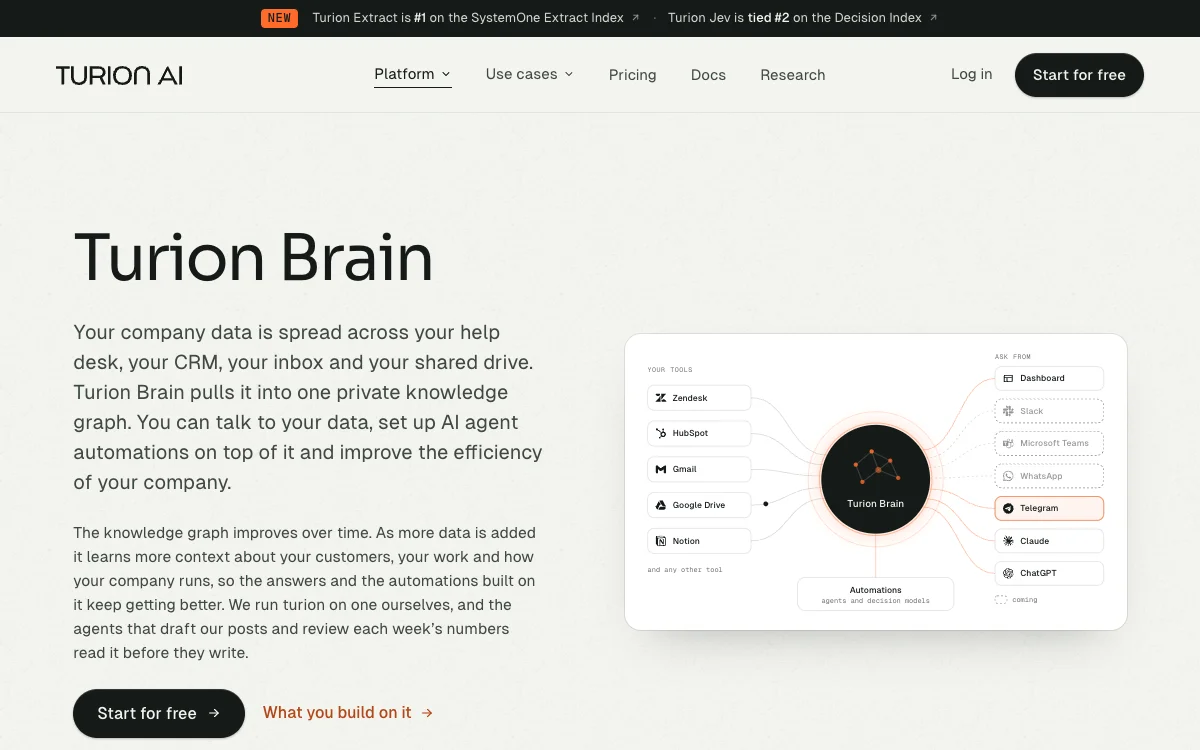
- #1Editor's ChoiceCompany Knowledge GraphEnterprise+ TeamPricingFree to start · Paid plansFree tierYes
Turion Brain
Best for: Company knowledge graphs & AI automations
Pulls company data out of your help desk, CRM, inbox and shared drive into one private knowledge graph you can query and build AI agent automations on.
What we like
- Turns scattered help desk, CRM, inbox, and drive data into one private knowledge graph
- Works where teams already operate — dashboard, Telegram, Claude, ChatGPT, and automations
- Continuously improves answers as new company data flows in, with free tier to start
Trade-offs
- Built for business teams and company workflows rather than solo personal note-taking
- Some chat channels (Slack, Microsoft Teams, WhatsApp) are still rolling out
Our Score
9.8/10Outstanding
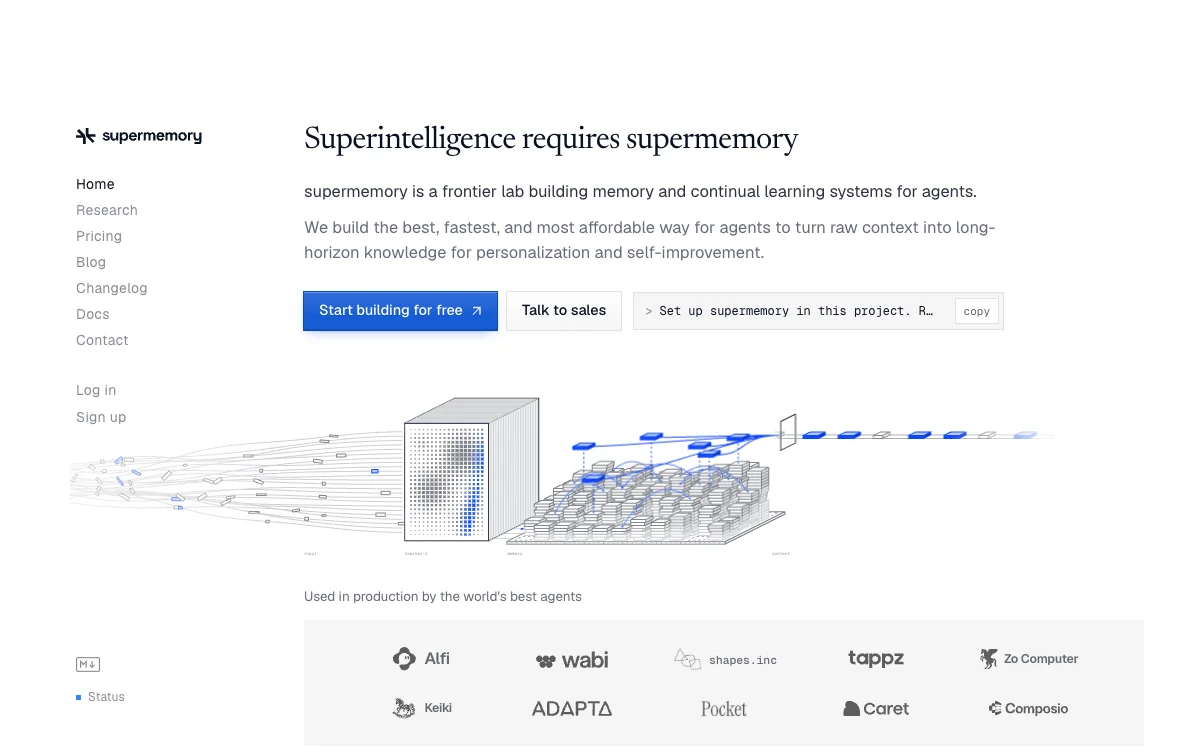
- #2Best ValueKnowledge Graph + RAGTeam+ Personal, EnterprisePricingFree · Pro $19/moFree tierYes
Supermemory
Best for: Fast cross-app memory & self-serve teams
High-speed memory + SuperRAG + app connectors, SQL-like permissions, and company brain templates.
What we like
- Class-leading recall benchmarks and sub-100ms retrieval speed
- Generous free plan and transparent Pro ($19/mo) to Scale ($399/mo) tiers
- Built-in connectors plus MCP support for personal and team workflows
Trade-offs
- Managed cloud focus offers less on-prem control than self-hosted engines
- Deepest enterprise compliance controls sit on higher plans
Our Score
9.5/10Outstanding
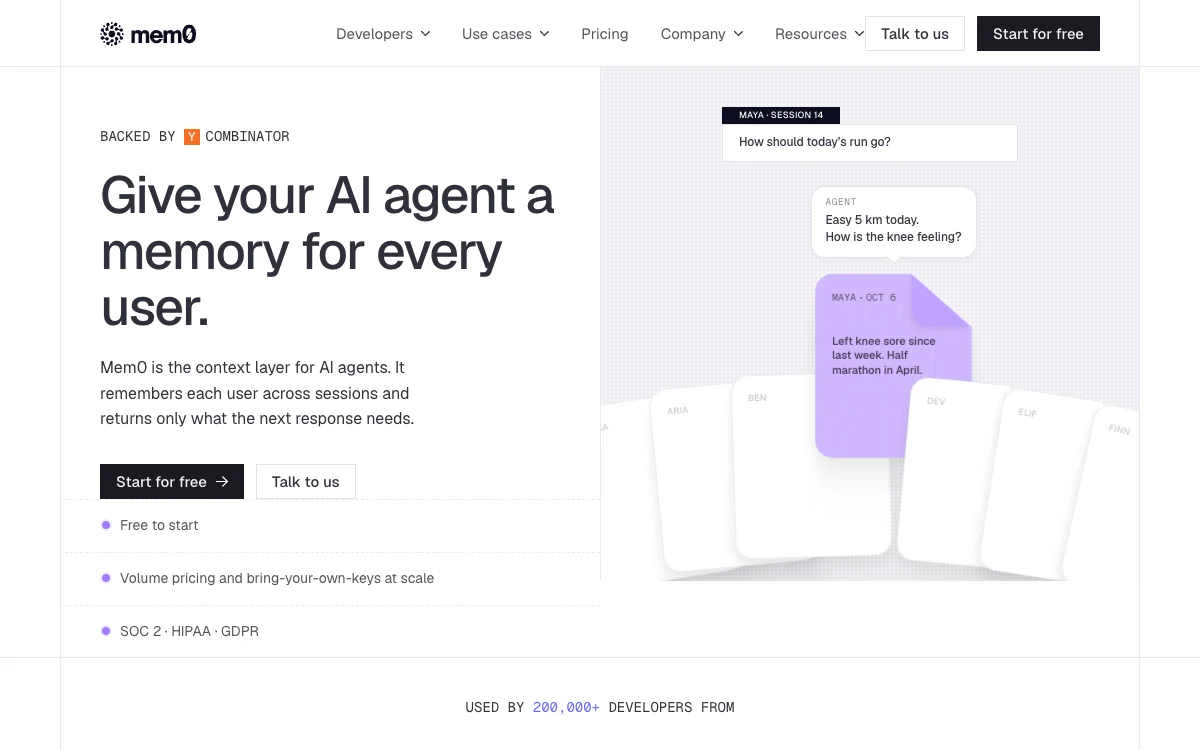
- #3Best for DevelopersVector + Graph APITeam+ Personal, EnterprisePricingFree · Pro $19/moFree tierYes
Mem0
Best for: Open-source SDKs & multi-agent apps
Automated fact/preference extraction into pgvector + optional Neo4j graph across AI clients.
What we like
- Broadest developer ecosystem and framework integrations on the market
- Self-host the open-source core or deploy instantly on managed cloud
- Clean automated fact extraction with optional Neo4j graph layer
Trade-offs
- Graph memory features require higher-tier cloud or managing Neo4j yourself
- Requires engineering setup rather than turnkey business app connectors
Our Score
9.3/10Excellent
- #4Best for ComplianceGateway / TraceEnterprise+ TeamPricingCustom · Book DemoFree tierLimited / Pilot
Memori
Best for: Governed inference-gateway & procedural memory
Inference-gateway memory capturing full execution traces into procedural memory (SOC 2, HIPAA, VPC).
What we like
- Captures full tool-call traces on the inference path without SDK rewrites
- Model-agnostic memory survives switching LLM providers
- Strict governance pools and traceable lineage built for enterprise security teams
Trade-offs
- Sales-led onboarding rather than instant self-serve checkout
- Over-engineered for lightweight personal or single-user assistants
Our Score
9.1/10Excellent
- #5Best GraphTemporal Knowledge GraphEnterprise+ TeamPricingFree Tier · Cloud & EnterpriseFree tierYes
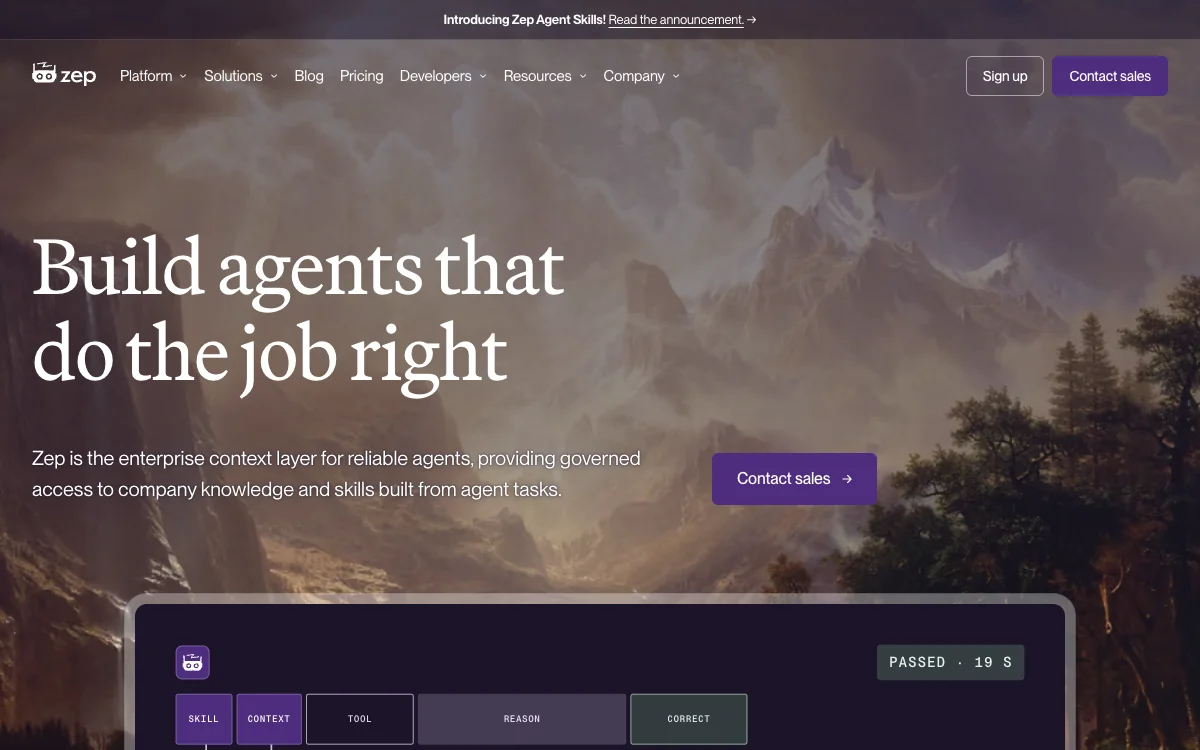
Zep / Graphiti
Best for: Temporal knowledge graphs & Context Lakes
Temporal knowledge graph with valid-from/valid-until timestamps and contradiction resolution.
What we like
- Time-aware knowledge graph prevents stale facts from polluting agent prompts
- Proven enterprise adoption with managed Context Lake and Agent Skills
- Open-source Graphiti engine plus free cloud tier for evaluation
Trade-offs
- Graph modeling and schema design have a steeper ramp-up than vector APIs
- Less consumer-app plug-and-play than Supermemory or Turion Brain
Our Score
8.9/10Very Good
How we rank
How we narrowed 34 platforms down to the Top 5
Recall Quality
Fact accuracy, staleness handling, and signal-to-noise ratio.
Integrations & MCP
Native connectors, SDK coverage, and cross-client MCP support.
Ease of Setup
Time from signup to working memory in production.
Pricing & Value
Free tier generosity, transparent plans, and ROI at scale.
Privacy & Governance
Data isolation, RBAC, audit trails, SOC 2 & HIPAA.
Looking for niche or experimental alternatives?
We keep our homepage focused exclusively on the Top 5. If you want to explore the remaining 29 evaluated tools (local Markdown vaults, coding-agent branches, or hyperscaler memory), browse our full reference tables by category.
Common questions
Still deciding? Our guides go deeper on architecture, pricing and features.
Which AI memory platform is #1 in 2026?
Turion Brain ranks #1 overall (9.8/10) as our Editor's Choice. It connects directly to company tools like Zendesk, HubSpot, Gmail, Google Drive, and Notion, compiling them into one private knowledge graph that teams and AI agents can query and automate on top of.
Why do you only list a Top 5 when 34 platforms exist?
Most teams waste weeks comparing overlapping tools that all wrap basic vector search. We evaluated 34 AI memory platforms and narrowed the main rankings to the 5 clear leaders across company knowledge graphs, self-serve speed, open-source developer SDKs, enterprise compliance, and temporal graphs. The remaining 29 tools are archived as second-priority references.
Which of the Top 5 AI memory platforms have a free tier?
Turion Brain, Supermemory, Mem0, and Zep / Graphiti all let you start for free. Supermemory and Mem0 both offer predictable self-serve Pro tiers starting at $19/month, while Memori focuses on custom enterprise gateway deployments.
Which platform is best for developers who want open-source or self-hosting?
Mem0 (#3, 9.3/10) is our Best for Developers pick thanks to its open-source core, self-hosting option, and wide SDK support across Python, TypeScript, LangGraph, CrewAI, and MCP. Zep / Graphiti (#5, 8.9/10) also offers an open-source temporal knowledge graph engine.
Which AI memory tool is safest for regulated enterprises?
For regulated environments requiring SOC 2, HIPAA, VPC deployment, and auditable provenance, Turion Brain (#1) and Memori (#4) stand out. Memori sits directly on the inference gateway with role-governed memory pools and full run-level lineage, while Turion Brain isolates company data in a private knowledge graph.
How does NeuronToken make money, and does it affect rankings?
NeuronToken is reader-supported: when you sign up through links on this site, we may earn an affiliate commission at no extra cost to you. Every platform in our Top 5 is scored against the same weighted rubric (Recall Quality 30%, Integrations 25%, UX 20%, Value 15%, Privacy & Security 10%).